
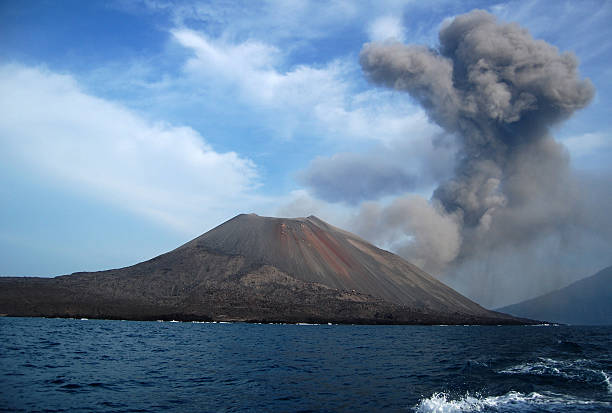
On the night of September 4, 2026, Anak Krakatau began an eruption that would become one of its most intense eruptive episodes of the year. At around 11:07 p.m. WIB, the volcano began producing lava fountains accompanied by powerful booms and deep rumbling sounds. The activity continued into the early hours of September 6, lasting approximately 25 hours in total [1].
For people living along the coasts of Banten and Lampung, the sounds were startling. Some residents initially believed that they were experiencing an earthquake. BMKG later confirmed that the sounds were generated by the eruption itself rather than by seismic activity [2].
What made this eruption particularly significant was not only its intensity, but also how far its effects travelled. Anak Krakatau is located in the Sunda Strait, between Java and Sumatra, and much of its eruptive activity normally affects the area immediately surrounding the volcano. This time, however, volcanic ash was carried by the wind toward mainland Indonesia, reaching parts of Banten before spreading further toward Jakarta and areas of West Java [4][5].
Reports of ashfall were recorded in areas including Serang, Pandeglang and Cilegon. The ash was also reported in locations such as Bogor, Cianjur and Sukabumi, considerably farther from the volcano itself [6]. For people living hundreds of kilometres away, Anak Krakatau suddenly became something they could see, breathe and experience as part of their everyday lives.
In communities such as Kampung Pasauran Satu in Serang Regency, residents reported ash beginning to accumulate during the afternoon of September 5. One resident, Sanan, 42, described experiencing irritation in his eyes while riding a motorcycle without a helmet. He also reported that ash stuck to his clothing, making everyday activities uncomfortable [5]. The ashfall affected more than just individual residents, with normal activities and school activities also being disrupted in some affected areas.
The health effects of volcanic ash are another reason why even relatively thin layers of ash can become a concern. Fine volcanic particles can irritate the eyes, skin and respiratory system. Children, older adults and people with existing respiratory conditions are particularly vulnerable to these effects [7]. This means that for communities experiencing ashfall, simple activities such as travelling outside or going to school may suddenly require additional precautions.
The effects of the eruption were not limited to people on the ground. Volcanic ash also created problems for aviation. On September 6, volcanic ash was detected around Soekarno-Hatta International Airport, leading authorities to temporarily close the airport as a safety precaution [8]. Several other airports were also temporarily affected, with BNPB reporting that four airports were closed because of the volcanic ash distribution [9]. The disruption eventually affected a much wider network of flights [10].
This is one of the reasons volcanic eruptions can become regional hazards. The danger does not necessarily stop where lava, rocks or other eruptive material reaches the ground. Fine ash can travel considerable distances through the atmosphere, potentially affecting communities, roads, airports and other infrastructure far from the volcano.
The eruption was even intense enough to damage some of the equipment used to monitor Anak Krakatau itself. Several monitoring devices, including CCTV cameras positioned near the crater, were damaged by material ejected during the eruption [11]. This made direct visual monitoring more difficult immediately following the most intense activity. However, monitoring did not stop completely, as authorities continued to use other observation systems and data to track the volcano’s condition [11].
For many Indonesians, however, the most worrying question was not about ash or cancelled flights. It was whether Anak Krakatau could produce another tsunami.
The concern is understandable. In December 2018, part of Anak Krakatau collapsed into the sea, triggering a tsunami that struck coastal communities in Banten and Lampung. Because of this history, renewed intense activity at the volcano naturally raised concerns about whether another collapse could happen.
During the September 2026 eruption, however, monitoring did not identify evidence of another large-scale collapse capable of generating a tsunami [13]. BRIN reported that its monitoring found no indication of a tsunami-generating event during the period of increased activity [13]. Authorities therefore did not identify an immediate tsunami threat associated with the September eruption. This does not mean that Anak Krakatau can never generate another tsunami; rather, no tsunami-generating collapse was detected during this particular event.
Although the September eruption appeared sudden to many people, the volcano had actually been showing signs of increased activity for several months. In June 2026, satellite observations detected SO₂ emissions and thermal anomalies around the crater [3]. By July, the increase in activity was significant enough for authorities to raise Anak Krakatau’s status from Level II (Waspada) to Level III (Siaga) on July 2 [3].
The volcano continued producing repeated Strombolian-type eruptions throughout July and August before the much more intense continuous eruption began on September 4 [1][3]. This means that the September event was not an isolated occurrence. Instead, it represented the peak of a broader period of elevated volcanic activity that had developed over several months.
The eruption also demonstrated just how many different ways a volcano can affect surrounding communities. Close to the volcano, people face hazards from lava, volcanic bombs and other eruptive materials. Farther away, volcanic ash can affect health, visibility, transport and aviation. In certain circumstances, changes to the volcano itself can also create tsunami hazards, as demonstrated by the 2018 event.
For residents living in areas affected by ashfall, authorities recommended limiting unnecessary outdoor activities and using masks and appropriate eye protection when going outside [7][12]. Authorities also maintained a 3-kilometre exclusion zone around the active crater area and advised fishermen, tourists and other members of the public not to approach the volcano [12].
Residents were also encouraged to follow information from official sources such as PVMBG/Badan Geologi, MAGMA Indonesia, BMKG and local authorities rather than relying on unverified reports circulating online [12].
The September 4–6 eruption ultimately demonstrated that Anak Krakatau’s influence can extend far beyond the small volcanic island itself. What began as an eruption in the middle of the Sunda Strait resulted in ashfall across parts of Banten, Jakarta and West Java, disrupted aviation, affected residents’ daily lives and even damaged monitoring equipment close to the volcano.
At the same time, the event demonstrated the importance of Indonesia’s volcanic monitoring system. Despite the intensity of the eruption, authorities were able to track the activity and determine that the event had not produced another tsunami-generating collapse.
Perhaps the most important lesson from the September eruption is that distance does not necessarily mean immunity from volcanic hazards. An eruption occurring in the middle of the Sunda Strait can affect the air people breathe, the roads they travel on, the flights they take and the communities they live in hundreds of kilometres away.
While the September eruption eventually subsided, Anak Krakatau’s increased activity over the preceding months shows why the volcano will continue to require close observation. Its history, location and ability to affect a large surrounding area make continued monitoring and public awareness an important part of protecting communities around the Sunda Strait.
References
[1] Badan Geologi, Ministry of Energy and Mineral Resources (ESDM). Erupsi Menerus Gunungapi Anak Krakatau Berakhir, Aktivitas Gunung Api Kembali Menurun dan Tetap Dipantau. September 2026. Badan Geologi / ESDM
[2] BMKG. BMKG Ungkap Dentuman di Bandung Raya Bukan Berasal dari Aktivitas Gempa Bumi. September 2026. BMKG
[3] Badan Geologi, ESDM. Kenaikan Tingkat Aktivitas Gunungapi Anak Krakatau dari Level II (Waspada) menjadi Level III (Siaga). July 2, 2026. Badan Geologi / ESDM
[4] BMKG. BMKG Terus Pantau Dampak Erupsi Gunung Anak Krakatau. September 2026. BMKG
[5] ANTARA News. Erupsi Anak Krakatau Terbangkan Abu ke Banten, Warga Keluhkan Mata Perih. September 2026. ANTARA News
[6] ANTARA News. Abu Anak Krakatau Sampai Bogor dan Sukabumi, Ini Penyebabnya. September 2026. ANTARA News
[7] Ministry of Health of the Republic of Indonesia. Abu Vulkanik Anak Krakatau Menyebar, Menkes Meminta Masyarakat Batasi Aktivitas di Luar Rumah. September 2026. Ministry of Health
[8] Directorate General of Civil Aviation, Ministry of Transportation. Information Regarding Temporary Closure of Soekarno-Hatta Airport. September 2026. Directorate General of Civil Aviation
[9] BNPB. Update Aktivitas Gunung Anak Krakatau Berlanjut: Empat Bandara Ditutup Sementara Akibat Sebaran Abu Vulkanik. September 2026. BNPB
[10] Reuters. Indonesia’s Jakarta Airport Suspends Flights Due to Ash from Mount Anak Krakatau. September 6, 2026. Reuters
[11] JawaWa. CCTV Monitoring Anak Krakatau Damaged Following Eruption Material Ejection. September 2026. JawaWa
[12] Badan Geologi, ESDM. Perkembangan Erupsi Gunungapi Anak Krakatau Tanggal 7 September 2026. September 7, 2026. Badan Geologi / ESDM
[13] BRIN. Monitoring Child of Krakatau Volcanic Activity: BRIN Finds No Tsunami Threat. September 2026. BRIN
Mount Anak Krakatau Eruption, September 4–6, 2026
Leave a Reply