
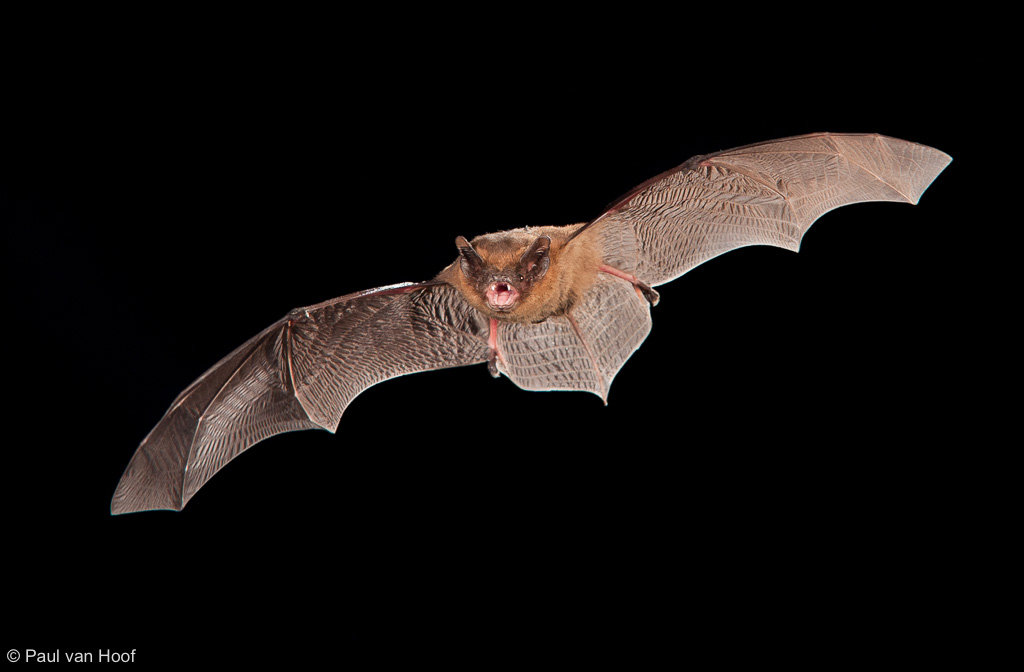
You might have seen some small round shadows shooting around in the air when you take a walk after dinner. Bats! These (in my opinion) cute creatures can be seen more easily now with the sun going down earlier each day. There are eighteen different species of bats in the Netherlands [1], but how do you know which one you are looking at?
Every species of bat has different characteristics: size, weight, diet, habitat, and more. However, in general, the bats you can find in the Netherlands all have a compact body, short neck, broad head, and thin wings[1].
After sunset, they come out to hunt and use sonar to find their way around in the air. Bats living in the Netherlands mate during autumn, right before they go into hibernation. During these nights, you can actually hear the males calling out to females during their courtship flight. The females store the sperm until spring. Only after hibernation, ovulation and fertilisation occur[1].
Lots of bats live in buildings and thus houses as well. They reside in the cavity wall, which they generally access through the side of the roof at either the roof ridge where both sides of the roof meet, or the tiles hanging over the side[2]. If you pay close attention to these areas around sunset, you can see them come out. However, they are very fast and are usually out in a flash.
Generally, you would not be able to hear a bat’s sonar (there are some exceptions, like the mating calls), unless you use a special bat-detector. This device converts the sonar, which is in the range of 18-120 kHz, into a frequency you can hear. You can buy bat-detectors for a low price or even rent them at your local nature association. Now you are able to hear the bats and recognise different species[4]!
There are four species which you have the highest chance of encountering on your bat spotting night: common pipistrelle, serotine bat, Daubenton’s bat, and common noctule[4]. The table gives a short overview of what to look at when identifying these species. The peak frequency of a bat is the frequency at which their call is the loudest, and thus easiest to hear. Each species “talks” at a different frequency and in a different way; that way they can never confuse each other with their calls [10].
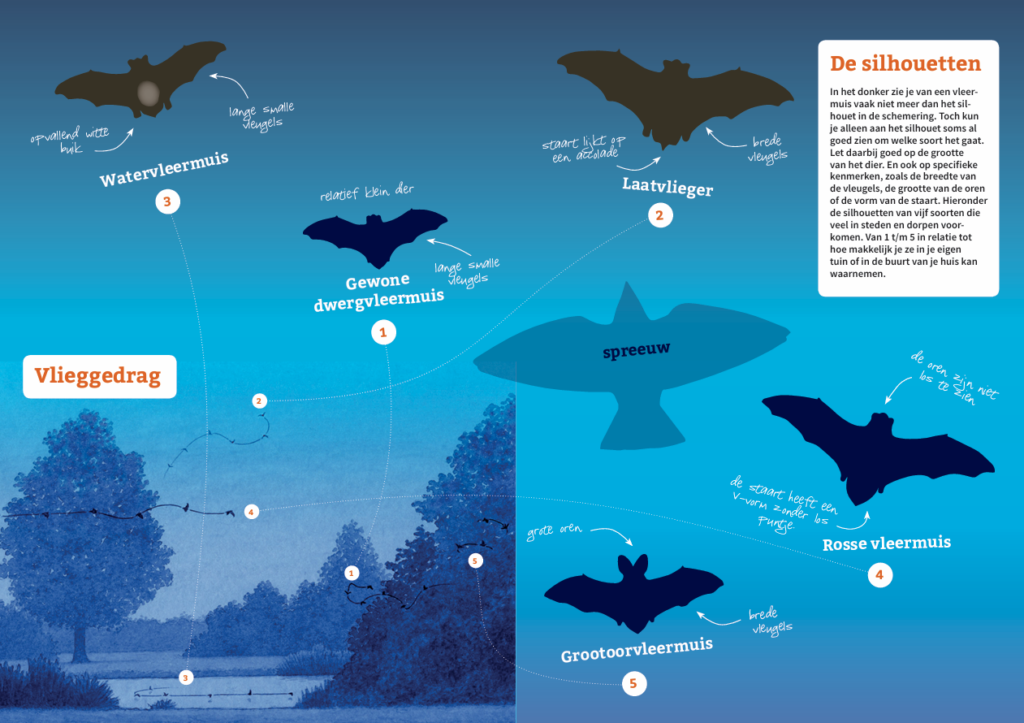
Each bat also has a unique flight pattern, which is shown in the identification card from the Dutch mammal association [11]. The size of the bats is shown in comparison with that of a starling.
| Common pipistrelle (gewone dwergvleermuis) | Serotine bat (laatvlieger) | Daubenton’s bat (watervleermuis) | Common noctule (rosse vleermuis) | |
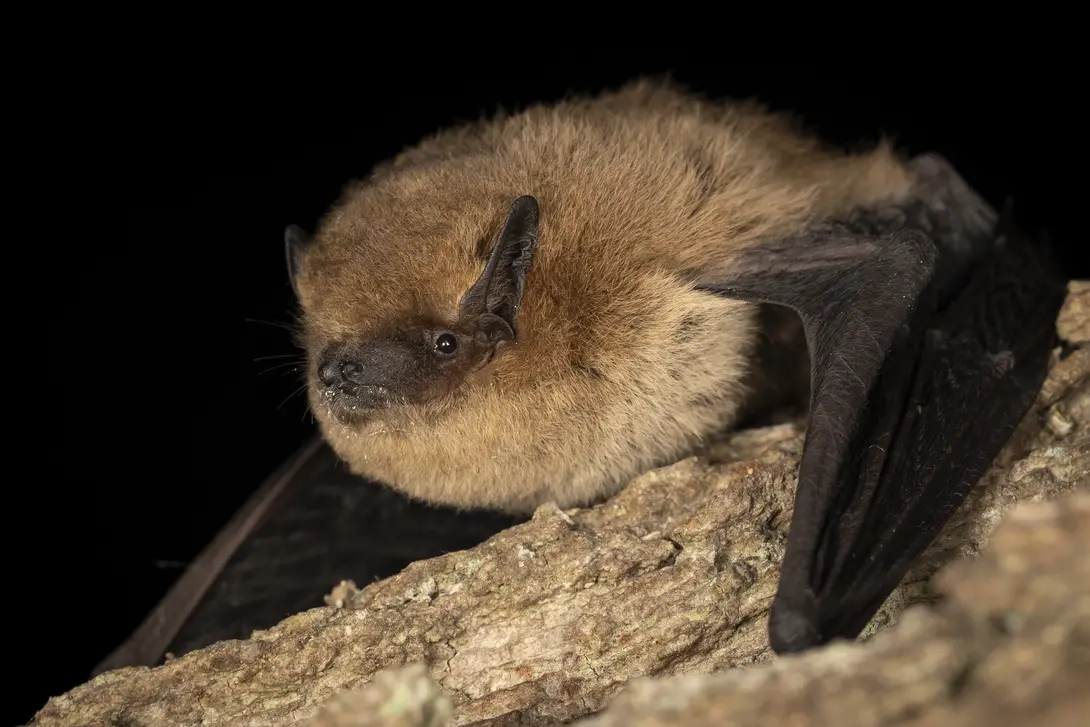 | 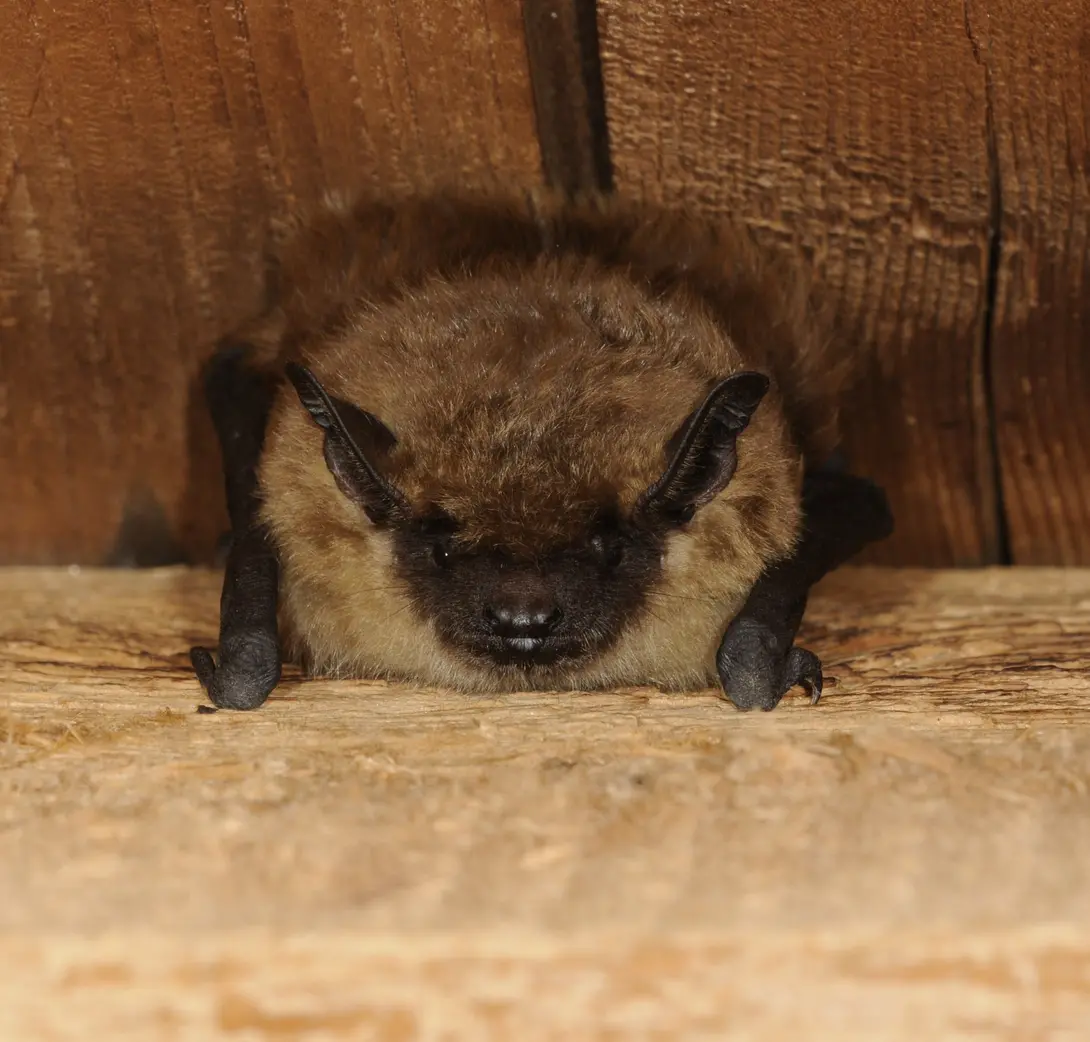 | 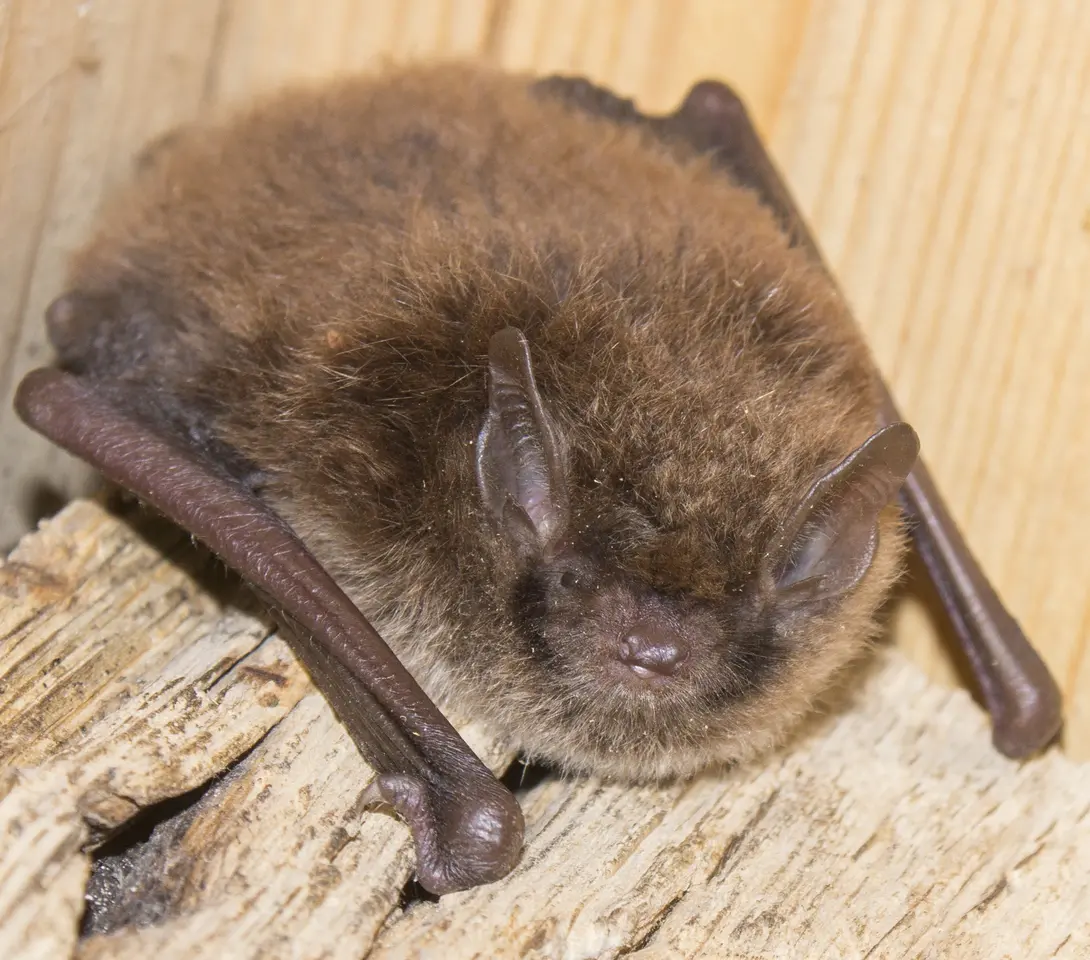 | 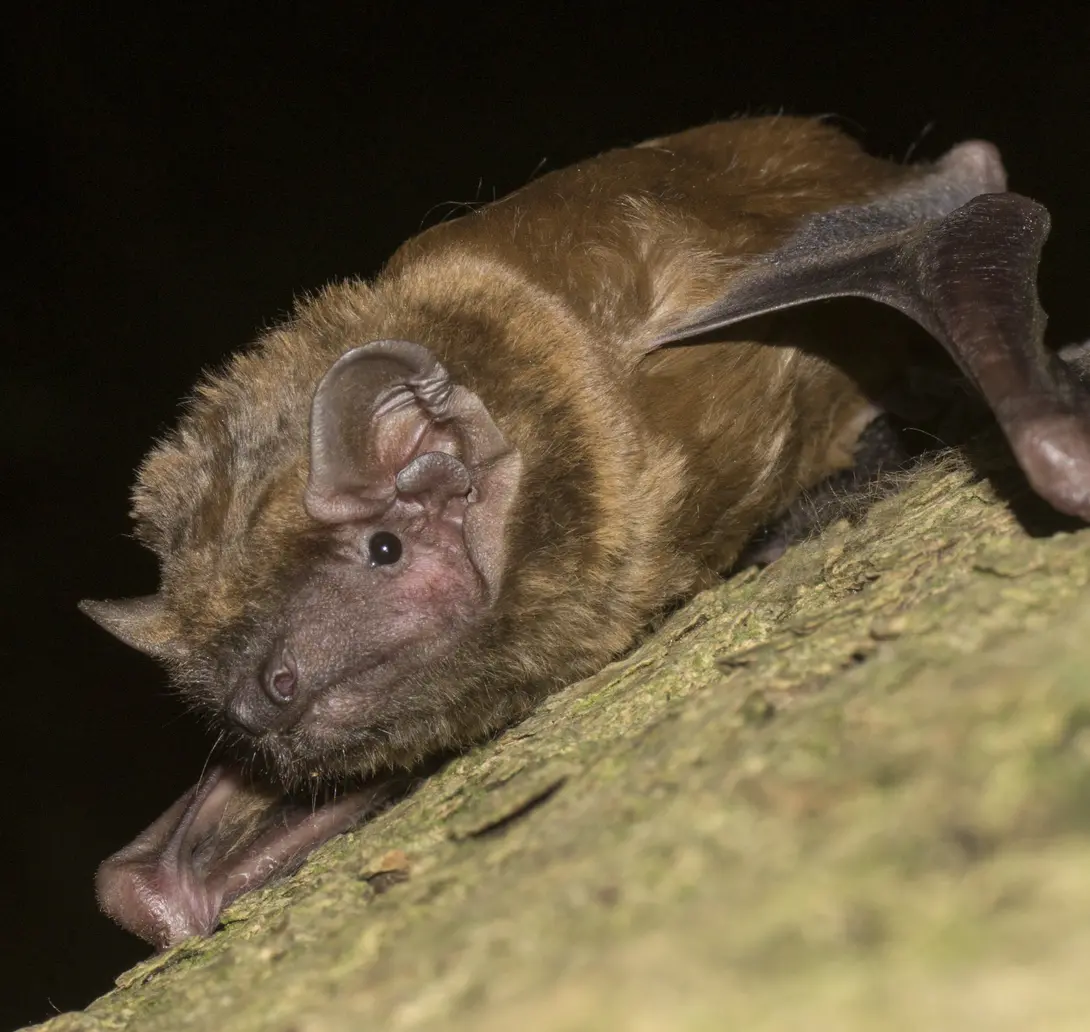 | |
| Peak frequency [5] | ~45 kHz | ~27 kHz | ~46 kHz | ~19 & ~26 kHz |
| Physical characteristics [6,7,8,9] | Size 3.6-5.1 cm | Size 6.2-8.2 cm | Size 4.0-5.5 cm | Size 6-8.9 cm |
| Weight 3.5-8 g | Weight 14-33 g | Weight 7-17 g | Weight 17-44 g | |
| Location [5] | Around buildings | Around buildings | Over water | Open sky, up high |
Each bat also has a unique flight pattern, which is shown in the identification card from the Dutch mammal association [11]. The size of the bats is shown in comparison with that of a starling.
Now you are officially ready to go out and do some fieldwork! Spotting these animals is about what to look for and where to look. So step into your backyard or street and keep your eyes peeled. Happy bat hunting, and let me know if you see any tonight.
[1] Vleermuizen in Nederland – Feiten, leefgebied & geluiden | Natuurmonumenten
[2] Verblijfplaatsen
[3] https://www.wikodakkapellen.nl/types/nokverhoging/kosten
[4] Vleermuizen spotten: tips, locaties en soorten in Nederland – Natuurspotters
[5] Which Bat Is That? — Guide to European Bat Calls
[6] Gewone dwergvleermuis | Zoogdierbescherming
[7] Laatvlieger | Zoogdierbescherming
[8] Watervleermuis | Zoogdierbescherming
[9] Rosse vleermuis | Zoogdierbescherming
Leave a Reply